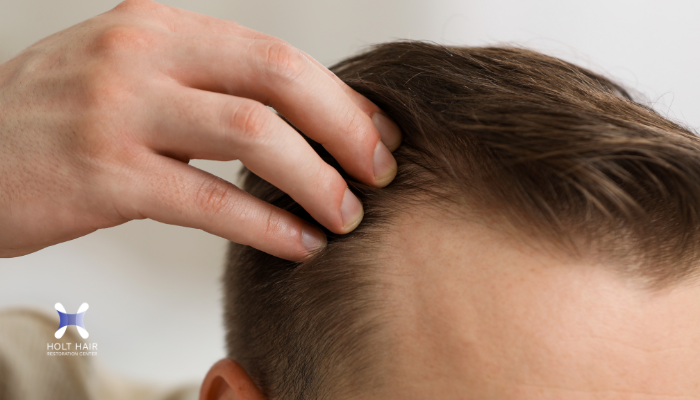
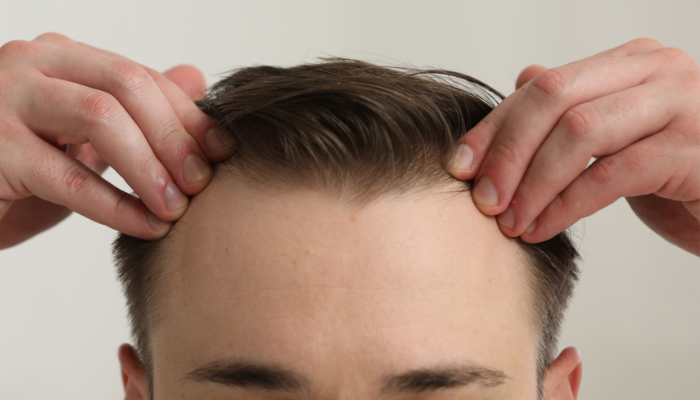
A receding hairline is often one of the first noticeable signs of hair loss. You may notice the hair around your temples becoming thinner, your forehead appearing larger, or your hairline gradually developing an “M” shape. While hairline changes can occur naturally with age, ongoing recession may also be a sign of an underlying form of hair loss.
Understanding the most common receding hairline causes can help you determine what may be happening and which hair restoration options may be worth considering. From genetics and hormonal changes to stress and certain hairstyles, several factors can contribute to changes in your hairline.
Table of Contents
What Is a Receding Hairline?
A receding hairline occurs when hair begins to thin or disappear along the front of the scalp, particularly around the temples. The pattern can vary from person to person.
For some people, recession begins gradually at the temples and progresses over many years. Others may experience more noticeable thinning across the entire frontal hairline.
A receding hairline is commonly associated with male pattern hair loss, but women can also experience changes in their frontal hairline or thinning around the temples.
Identifying the reason behind the change is an important first step in determining which hair restoration option may be appropriate.
What Causes a Receding Hairline?
There isn’t one single reason for hairline recession. Some of the most common receding hairline causes include:
1. Genetics and Male Pattern Baldness
Genetics are among the most common factors behind a receding hairline.
Androgenetic alopecia is hereditary and can cause hair follicles to gradually become smaller. In men, the condition commonly begins with thinning around the temples or crown and may eventually produce the characteristic M-shaped hairline.
The condition can begin earlier than many people expect. Some men develop signs of male pattern hair loss in their late teens or twenties, while others don’t notice significant changes until later in life.
If your father, grandfather, or other close relatives experienced pattern hair loss, you may have a greater likelihood of developing it as well.
2. Hormonal Factors
Hormones also play an important role in hereditary hair loss.
One hormone associated with male pattern baldness is dihydrotestosterone (DHT), a derivative of testosterone. In people who are genetically susceptible to DHT, affected hair follicles can gradually shrink through a process known as miniaturization.
As the follicles become smaller, they may produce shorter, finer hairs. Eventually, some follicles may stop producing visible hair altogether.
Pregnancy, menopause, thyroid disorders, and other hormonal changes can also affect hair density.
Because hair loss related to hormonal changes may require a different approach than hereditary hair loss, a professional evaluation can help identify potential contributing factors.
3. Aging
Hair naturally changes as we get older. Individual strands may become thinner, hair density can decrease, and the growth cycle may slow.
A slightly higher or more mature hairline does not necessarily mean significant baldness is developing. However, continued recession at the temples combined with progressive thinning may indicate androgenetic alopecia rather than normal maturation alone.
4. Stress and Telogen Effluvium
Significant physical or emotional stress can disrupt the normal hair growth cycle and contribute to a condition called telogen effluvium.
Major illness, surgery, rapid weight loss, significant emotional stress and other changes to the body can trigger increased shedding. Unlike classic male pattern baldness, telogen effluvium typically causes more widespread thinning rather than only affecting the frontal hairline.
Because different types of hair loss can occur at the same time, a professional evaluation can help distinguish between temporary shedding and progressive hair loss.
5. Nutritional Deficiencies and Medical Conditions
Certain medical conditions, medications, and nutritional deficiencies can contribute to hair loss.
Low levels of nutrients such as iron, for example, may be associated with increased shedding in some individuals. Autoimmune conditions can also cause specific patterns of hair loss.
If your hair loss develops suddenly, occurs in patches, causes scalp symptoms, or is accompanied by other health changes, a medical evaluation is especially important.
6. Traction and Hair Styling
Your hairstyle may also affect your hairline.
Hairstyles that repeatedly pull on the hair can damage follicles over time and contribute to traction alopecia. Tight braids, ponytails, extensions and similar styles can place continuous tension on the hairline.
Reducing tension early may help prevent additional damage. Long-term traction, however, can sometimes lead to permanent hair loss.
Can a Receding Hairline Grow Back?
Whether a receding hairline can grow back depends largely on why the hair was lost and how advanced the hair loss has become.
Temporary hair loss caused by stress, nutritional deficiencies or another treatable underlying condition may improve once the cause is addressed. Hereditary hair loss, on the other hand, is generally progressive.
That doesn’t mean you have to simply watch your hairline continue to recede. Treatments may help slow further loss, preserve existing hair, or stimulate some growth. For areas where follicles no longer produce sufficient hair, hair transplantation may provide a more permanent restoration option.
Early evaluation is especially valuable because preserving existing hair is generally easier than restoring hair after extensive loss has occurred.
Hair Restoration Options for a Receding Hairline
The right receding hairline treatment depends on the cause and extent of your hair loss, your overall health, and your restoration goals.
Medications for Hair Loss
Minoxidil is a widely used treatment for pattern hair loss that may help stimulate hair growth, reduce further hair loss, and support existing hair. It is applied directly to the scalp and is generally most effective when used consistently over time.
Results can vary from person to person, and it may take several months before noticeable improvement occurs. Continued use is typically necessary to maintain the benefits, as hair loss may gradually resume after treatment is discontinued.
Platelet-Rich Plasma (PRP)
Platelet-rich plasma (PRP) therapy is a non-surgical hair restoration treatment that uses a concentrated portion of the patient’s own blood.
Platelets contain growth factors involved in tissue repair and cellular signaling. PRP is injected into targeted areas of the scalp with the goal of supporting weakened follicles and encouraging healthier hair growth.
PRP may be recommended as a stand-alone treatment for certain types of thinning or as part of a broader hair restoration plan.
Hair Transplant Surgery
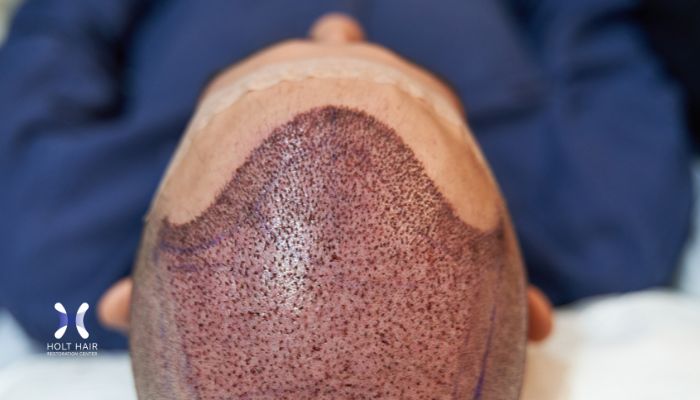
For patients with permanent hair loss along the frontal hairline, hair transplant surgery can provide long-lasting, natural-looking restoration. Modern procedures typically relocate healthy hair follicles from areas with stronger growth, usually the back or sides of the scalp, to thinning or bald areas.
One commonly used technique is Follicular Unit Extraction (FUE), in which individual follicular units are harvested from the donor area and carefully transplanted into the recipient area. At our practice, we offer the ARTAS® Robotic Hair Restoration System, an advanced technology that uses robotic precision and digital imaging to assist with the FUE hair restoration process.
For hairline restoration, the placement, angle, direction, and density of transplanted follicles are particularly important. A carefully designed hairline should complement the patient’s facial proportions while creating a natural-looking result that remains appropriate as they age.
Conclusion
Understanding the most common receding hairline causes is the first step toward making an informed decision about treatment.
While some types of hair loss may be temporary, progressive pattern hair loss can continue over time. Early intervention may help preserve existing hair, while modern hair restoration options can address areas where significant or permanent recession has already occurred.
If you’re concerned about changes in your hairline, schedule a consultation with our qualified team. A personalized evaluation can help identify the cause of your hair loss and determine which treatment options may help you achieve a fuller, natural-looking hairline.